




The global push for clean, efficient, and cost-effective energy is turning the solar industry on its edge—literally. Bifacial solar modules, which capture sunlight on both their front and rear sides, are rapidly moving from a niche technology to a mainstream powerhouse. By harnessing reflected and diffused light from the ground, rooftops, or other surfaces, these panels can generate significantly more electricity than their traditional monofacial counterparts. This article explores the dynamic bifacial solar energy market, examining the drivers behind its growth, key applications, and the challenges and opportunities that lie ahead.

How Bifacial Technology Works: Catching Light from All Angles
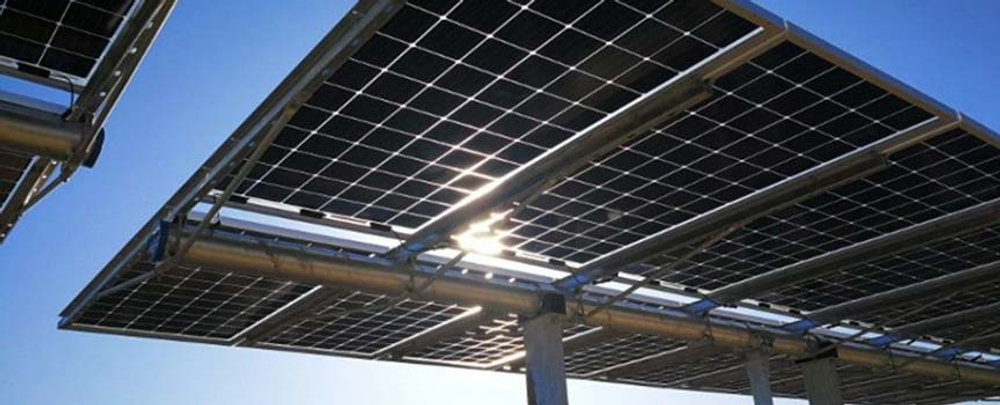
Unlike standard solar panels with an opaque backsheet, bifacial modules feature a transparent backsheet or dual glass. This allows the photovoltaic cells to convert not only direct sunlight striking the front but also albedo (the measure of surface reflectivity) light that bounces onto the rear. Common high-albedo surfaces include white gravel, sand, concrete, and specialized reflective grounds. In optimal installations, bifacial panels can achieve energy yield gains of 5% to 30%, making them a compelling choice for maximizing energy output per square meter.
Market Drivers: Fueling Exponential Growth
-
Higher Energy Yield & Levelized Cost of Energy (LCOE): The primary driver is simple: more power from the same footprint. This increased efficiency directly lowers the LCOE, a critical metric for project financiers and developers. Even a modest gain in yield can translate to millions in additional revenue over a project’s lifetime.
-
Durability & Longevity: Many bifacial panels are built with glass-glass construction, making them more resistant to humidity, corrosion, and potential-induced degradation (PID). They often come with longer performance warranties (30+ years), enhancing their value proposition.
-
Falling Costs: Advances in manufacturing, economies of scale, and the decreasing cost of key components like photovoltaic glass have made bifacial modules nearly cost-competitive with monofacial ones. The premium is shrinking as adoption widens.
-
Supportive Policies & Standards: Governments and international bodies are recognizing bifacial potential. The exemption of bifacial panels from certain tariffs in key markets like the U.S. provided a significant boost. Furthermore, updated IEC standards for rating bifacial panel power have reduced buyer uncertainty.
-
Compatibility with Tracking Systems: Bifacial technology pairs exceptionally well with single-axis trackers. The trackers tilt the panels to follow the sun, maximizing front-side irradiation while optimally positioning the rear side to capture reflected light throughout the day.
Key Applications: Where Bifacial Makes the Most Impact
-
Utility-Scale Solar Farms: This is the largest and fastest-growing segment. Large ground-mounted installations over highly reflective surfaces (e.g., desert sand, white gravel) see the most dramatic gains. The combination of bifacial modules and trackers is becoming the new standard for maximizing land use.
-
Commercial & Industrial (C&I) Roofs: Buildings with light-colored, reflective rooftops (like TPO or painted metal) are ideal candidates. Bifacial panels can capture light reflected off the roof surface, increasing output without needing more space.
-
Agrivoltaics & Building Integration: The technology is well-suited for installations where light transmission or dual use is desired. This includes solar canopies over parking lots, noise barriers along highways, and agricultural settings where crops grow beneath raised panels.
Market Landscape & Regional Hotspots
The market is led by major global solar manufacturers, including LONGi, JinkoSolar, Trina Solar, and Canadian Solar, who have heavily invested in bifacial production lines. Regionally, growth is concentrated in:
-
Asia-Pacific: Dominates in both manufacturing and deployment, led by China, India, and Southeast Asia, driven by massive government solar targets.
-
North America: A major growth market, particularly the U.S., where large-scale solar farms are rapidly adopting bifacial-tracking combinations.
-
Europe & Middle East: Strong growth in European countries committed to renewables, and in the Middle East, where abundant sunlight and desert conditions offer perfect testing grounds for high-yield bifacial projects.
Challenges and the Road Ahead
Despite the optimism, hurdles remain:
-
Bankability & Modeling: Accurately predicting the rear-side gain is complex, depending on site-specific factors like albedo, mounting height, and array spacing. This can pose challenges for project financing, though advanced simulation tools are improving.
-
Higher Initial System Costs: While module prices are competitive, the need for specialized mounting structures (to elevate panels for rear-side access) can increase balance-of-system costs.
-
Installation & O&M Nuances: Installers must consider rear-side clearance and soiling on both sides. Cleaning protocols may need adaptation.
Read More-
https://www.zionmarketresearch.com/de/report/medium-chain-triglycerides-market
https://www.zionmarketresearch.com/de/report/fishing-nets-and-aquaculture-cages-market
https://www.zionmarketresearch.com/de/report/board-to-board-btob-floating-connectors-market
https://www.zionmarketresearch.com/de/report/aircraft-refurbishing-market
https://www.zionmarketresearch.com/de/report/aircraft-mro-market
https://www.zionmarketresearch.com/de/report/alternative-protein-market
Conclusion: A Bright, Two-Sided Future
The bifacial solar market is poised for sustained, robust growth. As the technology matures, costs decline further, and predictive models become more reliable, bifacial adoption is expected to accelerate. It represents a fundamental efficiency leap in photovoltaic technology, allowing developers to extract more clean energy from the same sun, the same land, and the same investment. In the relentless pursuit of a sustainable energy future, the bifacial revolution proves that sometimes, the most powerful solutions come from looking at a problem—and the sun—from both sides.