


The Polymerase Chain Reaction (PCR) has been the undisputed workhorse of molecular biology for decades. But as the demand for absolute quantification and detection of the faintest genetic signals grows, a more precise technology is rising to the forefront: Digital Polymerase Chain Reaction Market (dPCR). The dPCR market is no longer a niche segment; it is a dynamic, high-growth engine driving the next wave of diagnostics, biopharma development, and advanced research.
What is Digital PCR and Why is it a Game-Changer?
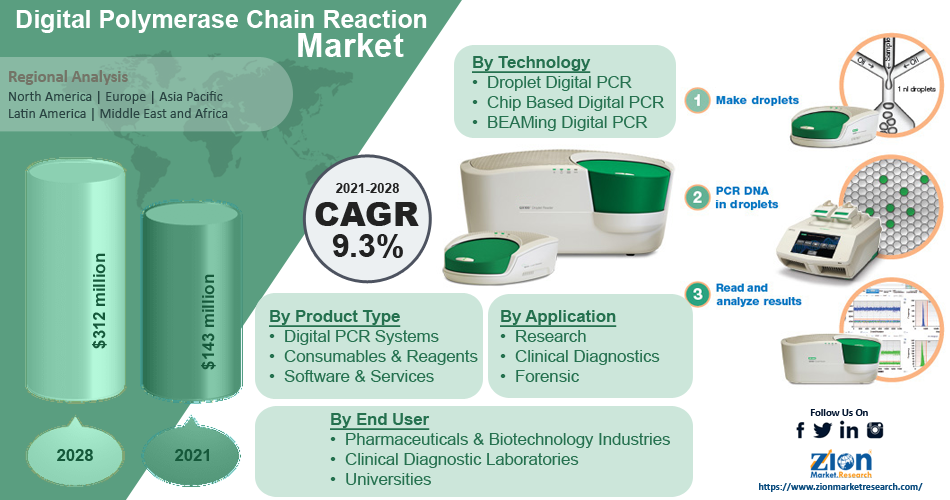
Unlike traditional quantitative PCR (qPCR), which infers target concentration from amplification curves relative to standards, dPCR takes a direct, binary approach. The sample is partitioned into thousands or millions of individual nanoscale reactions. After amplification, each partition is simply read as “positive” (target present) or “negative” (target absent). Using Poisson statistics, the absolute count of target molecules is calculated with unparalleled accuracy, without the need for a standard curve.
This absolute quantification makes dPCR exceptionally robust against inhibitors and sample matrix effects, and gives it a superior sensitivity for detecting rare mutations, copy number variations, and viral pathogens at very low loads.
Market Drivers: Fueling Exponential Growth
The global dPCR market, valued at approximately $6.5 billion in 2023, is projected to grow at a compound annual growth rate (CAGR) of over 9% from 2024 to 2030. This growth is underpinned by several powerful drivers:
-
The Oncology Diagnostics Revolution: dPCR is becoming indispensable in liquid biopsy applications. It can detect and quantify circulating tumor DNA (ctDNA) with the sensitivity required for early cancer detection, monitoring minimal residual disease (MRD), and tracking therapy-resistant mutations in real-time.
-
Infectious Disease and Pathogen Detection: The COVID-19 pandemic highlighted the need for ultra-sensitive viral load monitoring and variant detection. dPCR is now a gold-standard confirmatory tool for low-level infections (e.g., HIV, hepatitis) and complex microbial communities.
-
Biopharmaceutical and Cell & Gene Therapy Development: The entire workflow—from vector design and cell line development to quality control and release testing—relies on precise nucleic acid quantification. dPCR is critical for measuring viral vector titer, gene editing efficiency, and ensuring product safety and potency.
-
Non-Invasive Prenatal Testing (NIPT) and Genetic Screening: The need for highly accurate, quantitative analysis of fetal DNA in maternal blood for aneuploidies and monogenic disorders is a significant application area.
-
Technological Advancements: Automation, higher-throughput systems, reduced costs per sample, and user-friendly software are making dPCR more accessible to clinical and routine lab environments.
Market Segmentation: Where is the Action?
-
By Product & Service:
-
Instruments & Systems: The core hardware, including benchtop and chip-based systems. This segment is driven by innovation in partitioning technology (droplet-based vs. chip-based) and throughput.
-
Reagents & Consumables: The recurring revenue engine, including assays, master mixes, and chips/cartridges. This is the largest and most stable segment.
-
Software & Services: Advanced analytics platforms and contract research services are growing rapidly.
-
-
By Application:
-
Clinical Diagnostics (oncology, infectious disease, genetics) is the fastest-growing segment.
-
Research Applications (biomarker discovery, single-cell analysis, environmental monitoring).
-
Biopharmaceutical & Biotechnology Quality Control.
-
-
By End-User:
-
Hospitals & Diagnostic Laboratories
-
Pharmaceutical & Biotechnology Companies
-
Academic & Research Institutes
-
Contract Research Organizations (CROs)
-
The Competitive Landscape: A Battle of Titans and Innovators
The market is dominated by a few key players who have established strong technological and distribution moats:
-
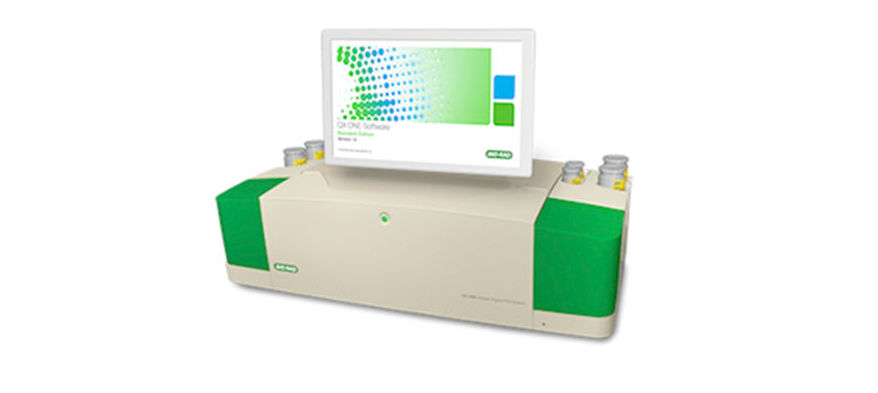
Bio-Rad Laboratories: A pioneer with its droplet digital PCR (ddPCR™) technology, holding a commanding market share.
-
Thermo Fisher Scientific: A giant leveraging its vast qPCR installed base and integrated ecosystem with its QuantStudio™ Absolute Q dPCR system.
-
QIAGEN: Offering automated, high-throughput solutions with its QIAcuity series, focusing on seamless digital workflows.
The landscape also features specialized players like Stilla Technologies (Naica system), JN MedSys, and Merck KGaA, who drive innovation in partitioning, multiplexing, and cost reduction.
Challenges and Restraints
Despite its promise, the dPCR market faces hurdles:
-
High Initial Capital Investment: dPCR instruments are significantly more expensive than standard qPCR systems.
-
Throughput and Workflow: While improving, traditional dPCR can be slower and more hands-on than high-throughput qPCR for large-scale screening.
-
Assay Standardization and Regulatory Pathways: Widespread clinical adoption requires clear regulatory guidelines (FDA, CE-IVD) for dPCR-based diagnostic tests.
-
“Good Enough” qPCR: For many routine applications, the superior precision of dPCR is not always necessary, making cost-effective qPCR the preferred choice.
Future Outlook: The Road to Clinical Ubiquity
The trajectory of the dPCR market points toward integration and automation. The future lies in:
-
Fully Automated, Walk-Away Systems: Integrating sample preparation, partitioning, PCR, and analysis for the clinical lab.
-
Multiplexing Prowess: Expanding from 2-5 colors to true high-plex digital detection in a single well.
-
Point-of-Care (POC) Potential: Miniaturized, cartridge-based systems could bring absolute quantification to the bedside or field.
-
AI-Powered Analytics: Advanced software for complex data interpretation, especially in oncology and microbial communities.
Read More-
https://www.zionmarketresearch.com/de/report/digital-polymerase-chain-reaction-market
https://www.zionmarketresearch.com/de/report/home-potassium-monitoring-devices-market
https://www.zionmarketresearch.com/de/report/basketball-apparel-market
https://www.zionmarketresearch.com/de/report/base-transceiver-station-bts-market
https://www.zionmarketresearch.com/de/report/autonomous-mining-equipment-market
Conclusion
The Digital PCR market is transitioning from a premium research tool to a cornerstone of precision medicine. Its ability to deliver absolute, sensitive, and reproducible quantification is answering critical needs in oncology, advanced therapeutics, and pathogen surveillance. While challenges remain, the relentless drive towards more accessible, automated, and standardized solutions ensures that dPCR will not just coexist with qPCR, but will define the new gold standard for a wide array of quantitative genomic applications in the years to come. For investors and industry stakeholders, the dPCR market represents a high-value segment at the exciting intersection of technology, biology, and patient care.