



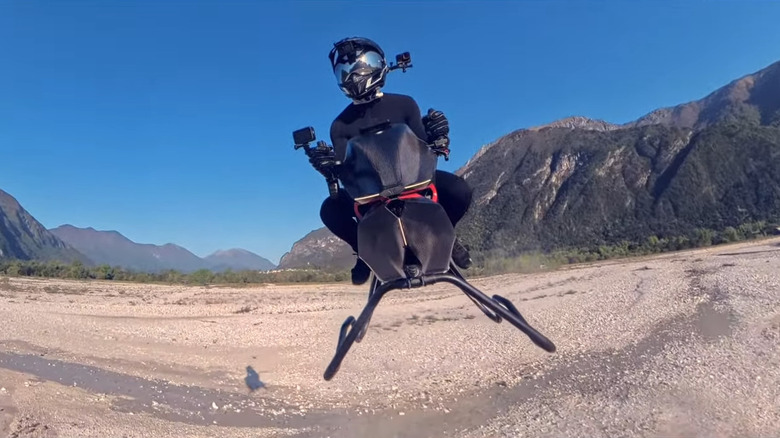
For decades, the flying motorbike has been a staple of science fiction, symbolizing ultimate freedom and futuristic cool. Today, that fiction is rapidly accelerating toward fact. What was once a fantastical dream is now a nascent but serious market, fueled by advancements in electric propulsion, lightweight composites, and autonomous flight systems. The Flying Motorcycle Market is no longer about “if,” but “when” and “how.”
This emerging sector, often grouped under Urban Air Mobility (UAM) or electric Vertical Take-Off and Landing (eVTOL), is poised to redefine personal transportation, emergency services, and recreational adventure.
Market Drivers: Why the Sky is the Limit
Several converging technologies and societal needs are propelling this market off the ground:
-
The eVTOL Revolution: The core innovation is distributed electric propulsion. Multiple quiet, efficient electric motors powering rotors or ducted fans make the mechanics of safe, compact vertical flight feasible.
-
Urban Congestion: With cities becoming more gridlocked, the third dimension offers a compelling escape. Flying motorbikes promise point-to-point travel that bypasses ground infrastructure entirely.
-
Material Science: Carbon fiber and advanced alloys provide the necessary strength-to-weight ratio to create airframes that are both robust and light enough for efficient flight.
-
Consumer & Military Demand: There is significant pent-up demand from high-net-worth individuals and adrenaline-seeking enthusiasts. Simultaneously, military and first-responder applications (for rapid deployment, reconnaissance, and medevac) provide a critical early-adopter pathway and funding source.
Key Players and Diverse Designs
The competitive landscape is a mix of startups and established aerospace firms, each with distinct design philosophies:
-
The Performance Pioneers: Companies like Jetpack Aviation (with their Recreational Speeder) and Dragon Air are creating sleek, single-rider vehicles designed for thrill and agility, often with a short-range, high-performance profile.
-
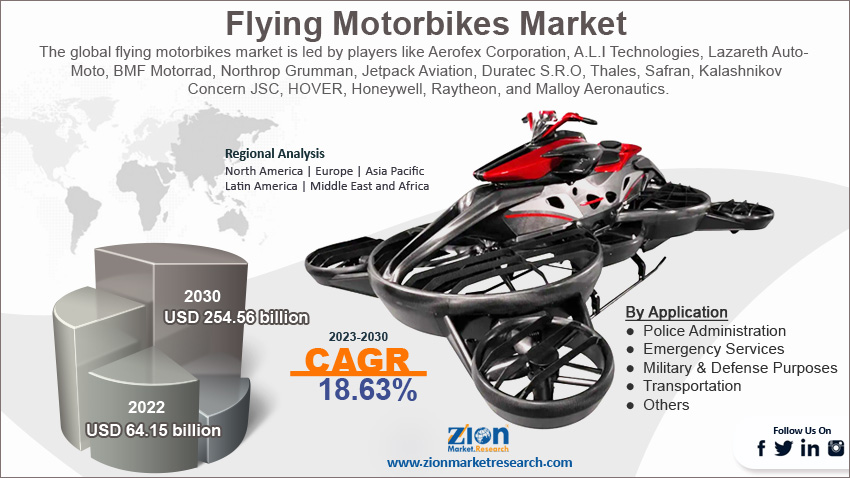
The Practical Commuters: Firms like ALI Technologies (Japan’s XTurismo) and Ryse Aero are focusing on somewhat more stable, multi-rotor designs aimed at eventual personal commuting or rural utility use.
-
The Military-First Developers: SurViva is a prime example, developing its flying motorbike explicitly for paramilitary and search-and-rescue operations, ensuring robustness and practicality drive the design.
Designs vary from open-frame, motorcycle-style seats to enclosed cockpits, from hydrogen-electric hybrid systems to pure battery-electric models, reflecting the market’s search for an optimal formula.
Soaring Challenges: The Turbulence Ahead
The path to a commercial market is fraught with significant headwinds:
-
Regulatory Hurdles: This is the single biggest barrier. Aviation authorities like the FAA (USA) and EASA (Europe) are meticulously crafting new frameworks for “powered ultralight” or new categories of pilot-operated eVTOL vehicles. Certification for safety, noise, and air traffic management will take years.
-
Safety & Public Perception: The “flying motorbike” must achieve a safety record comparable to aviation, not motorcycles. Public acceptance of these vehicles buzzing over neighborhoods requires demonstrably fail-safe systems (like parachute recovery) and near-silent operation.
-
Cost & Accessibility: Initially, prices will be exorbitant (early models are in the $150,000 – $500,000+ range), catering solely to elite buyers. Mass adoption requires dramatic reductions in battery and manufacturing costs.
-
Infrastructure: “Vertiports” or landing pads need to be integrated into urban and suburban landscapes. Charging/refueling networks and secure parking must be developed.
-
Pilot Training: Who can fly one? Will it require a full pilot’s license or a new, specialized “VTOL operator” certificate? This affects the potential customer base dramatically.
Market Outlook and Future Trajectory
Analysts project a phased evolution for the market:
-
2024-2028: The Demonstration & Niche Phase: Sales will be minimal, focused on demonstration units, military contracts, and ultra-wealthy recreational buyers. Regulatory sandboxes will be established in progressive regions.
-
2028-2035: The Commercial & Specialized Use Phase: We’ll see the first approved commercial models for specific uses: emergency services, border patrol, and perhaps air taxi services in controlled environments. Prices begin to moderate.
-
2035+: The Potential Mass-Market Phase: If autonomy matures and costs plummet, a future with simplified, possibly AI-assisted piloting could open the market to a broader audience. However, widespread personal ownership may remain limited compared to fleet-operated, ride-share style services.
Read More-
https://www.zionmarketresearch.com/de/report/sexual-wellness-market
https://www.zionmarketresearch.com/de/report/molecular-beam-epitaxy-mbe-market
https://www.zionmarketresearch.com/de/report/latin-america-candelilla-wax-market
https://www.zionmarketresearch.com/de/report/diesel-rotary-ups-drups-market
https://www.zionmarketresearch.com/de/report/flying-motorbikes-market
Conclusion: A Cautious Ascent
The flying motorbike market represents the bleeding edge of personal mobility. It captures the human imagination like few other technologies. While the technical challenges are being solved, the real battles will be fought in regulatory offices and in the court of public opinion.
Investors and enthusiasts should buckle up for a long, iterative journey. The first commercially viable flying motorbikes won’t replace your garage sedan, but they will open a new chapter in aviation—one defined by personal freedom, vertical access, and a reimagining of what it means to “hit the road.” The race for the sky is on, and the winners will be those who master not just the engineering, but the complex ecosystem required to sustain flight.