





For decades, the flying motorcycle has been a staple of science fiction, symbolizing ultimate freedom and futuristic mobility. Today, that fiction is rapidly becoming fact. No longer confined to comic books and movies, the flying motorcycles market is lifting off the drawing board and into the realm of certified aircraft and pre-orders. This nascent industry promises to revolutionize personal transport, logistics, and emergency services, but it also navigates a complex airspace of regulatory, technological, and market challenges.
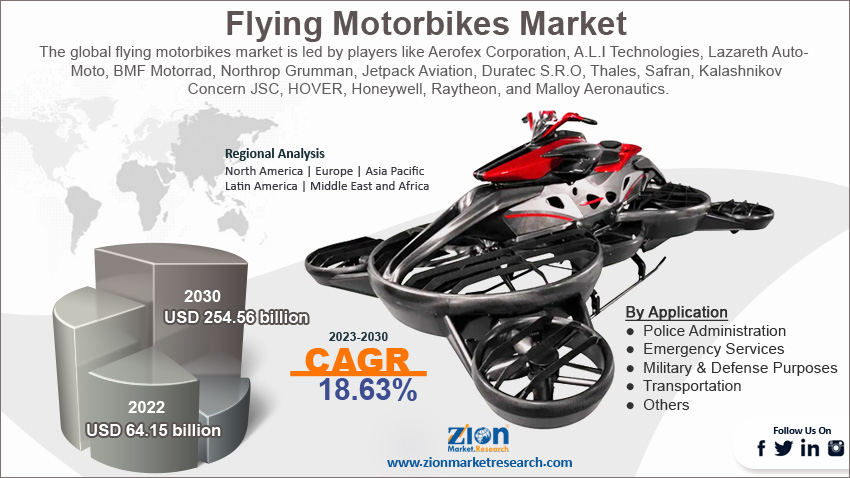
From Concept to Concrete: Defining the Market
The term “flying motorcycle” broadly encompasses a class of vehicles known as eVTOLs (Electric Vertical Take-Off and Landing) with a motorcycle-like piloting experience. They are typically characterized by:
-
Compact, single or two-seater designs.
-
Exposed or minimally enclosed seating (unlike larger eVTOL air taxis).
-
Use of electric propulsion for zero-emission flight.
-
Multirotor or ducted fan systems for vertical lift.
Key players are a mix of ambitious startups and established aerospace names. Companies like Jetpack Aviation (with their Speeder), A.L.I. Technologies (now part of ANA), Xturismo (by Aerwins), and Hover are at the forefront, showcasing prototypes and limited production models. Their target markets are initially bifurcated: high-net-worth individuals for recreational use, and specific commercial/defense applications.
Market Drivers: Why the Time is Now
Several converging technologies and societal shifts are propelling this market:
-
Advancements in Battery Technology: Increased energy density of lithium-polymer and solid-state batteries is finally providing the power-to-weight ratio needed for meaningful flight duration.
-
Maturation of eVTOL Systems: Research from the broader urban air mobility (UAM) sector on stability, flight control, and safety is directly applicable.
-
Material Science: The use of carbon fiber composites and advanced alloys keeps vehicles lightweight yet durable.
-
Consumer Demand for Novelty and Efficiency: In a world clogged with traffic, the appeal of point-to-point aerial travel is undeniable. The “cool factor” is a significant initial driver.
-
Military and First Responder Interest: Applications for rapid deployment, medevac, and perimeter patrol are providing crucial early-use cases and funding.
The High-Stakes Hurdles: Challenges to Widespread Adoption
Before flying motorcycles become a common sight, the industry must clear formidable obstacles:
-
Regulation: This is the single biggest hurdle. Aviation authorities like the FAA (U.S.) and EASA (Europe) are meticulously creating frameworks for this new vehicle class. Certification for safety, pilot licensing, air traffic management for low-altitude flights, and noise regulations are all works in progress.
-
Safety: The margin for error is minimal. Systems must be fail-safe, with robust redundancy. Public acceptance hinges on an impeccable safety record.
-
Cost: Early models carry price tags from $150,000 to over $500,000, placing them firmly in the luxury or professional tool category.
-
Infrastructure: Where do you park and charge a flying motorcycle? The development of “vertiports” and charging networks is essential.
-
Public Perception and Noise: Gaining community buy-in and addressing noise pollution concerns will be critical for integration into urban and suburban areas.
Market Segmentation and Applications
The market is expected to evolve through distinct phases:
-
Phase 1: Recreational & Professional (2024-2030): Sales to enthusiasts, for motorsports events, and to specific industries (e.g., film, surveying, security).
-
Phase 2: Emergency & Defense Services: Adoption by fire departments for aerial reconnaissance, by paramedics for rapid response, and by military units for logistics.
-
Phase 3: Urban Mobility (Post-2030): Potential integration into broader urban air mobility networks as a “last-mile” or personal transit solution, pending regulatory and infrastructural maturity.
The Road (and Sky) Ahead: Future Forecast
Analysts project a period of steady, niche growth through the late 2020s. Market research suggests the global flying motorcycle market could grow from a few hundred units shipped today to a multi-billion dollar industry by 2035, with a compound annual growth rate (CAGR) well over 20%.
The trajectory will depend heavily on regulatory milestones and the success of pilot programs in controlled environments. As technology matures and scales, costs are expected to decrease, broadening the addressable market.
Read More-
https://www.zionmarketresearch.com/de/report/nature-grass-market
https://www.zionmarketresearch.com/de/report/diesel-rotary-ups-drups-market
https://www.zionmarketresearch.com/de/report/multimedia-chipsets-market
https://www.zionmarketresearch.com/de/report/flying-motorbikes-market
https://www.zionmarketresearch.com/de/report/snail-beauty-products-market
Conclusion: A New Dimension of Mobility
The flying motorcycle market represents more than just a luxury toy; it is the vanguard of personal aerial mobility. While it will not replace cars or motorcycles, it is carving out a new transportation niche—one that operates in the previously inaccessible space above our heads. The journey from prototype to common reality will be a marathon, not a sprint, filled with technical and regulatory tests. Yet, the companies and innovators persevering in this space are not just building vehicles; they are drafting the blueprint for a three-dimensional transportation future. The revolution, it seems, will not be televised—it will be flown.