


In an era defined by water scarcity, stringent environmental regulations, and the pursuit of sustainable industrial processes, a quiet technological revolution is underway. Membrane separation technology market, once a niche industrial process, has become a cornerstone of modern engineering, driving efficiency and enabling circular economies. The global market for these technologies is experiencing robust growth, projected to reach values exceeding USD 50 billion by 2030, propelled by a confluence of global challenges and technological advancements.
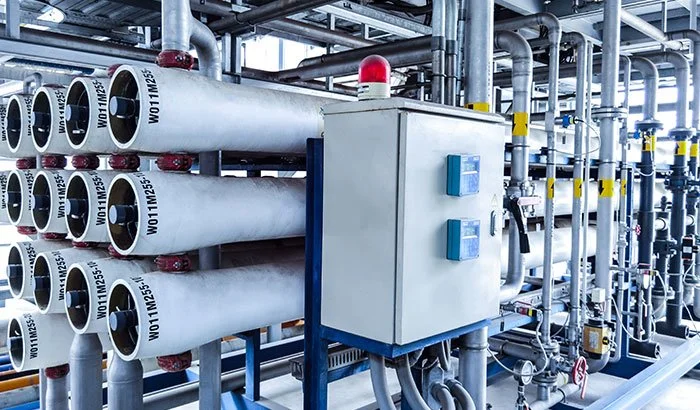
What is Membrane Separation Technology?
At its core, membrane separation is a physical filtration process. It uses a semi-permeable barrier (the membrane) to selectively separate components within a fluid stream—be it liquid or gas. Unlike thermal processes like distillation, it operates without phase change, making it inherently more energy-efficient. The separation is driven by pressure, concentration, or electrical gradients across the membrane.
Key processes, ordered roughly by pore size (largest to smallest), include:
-
Microfiltration (MF) & Ultrafiltration (UF): Removal of particles, bacteria, and large molecules. Widely used in food & beverage and wastewater treatment.
-
Nanofiltration (NF): Softens water and removes small organic molecules and divalent ions. Critical in water purification and dairy processing.
-
Reverse Osmosis (RO): The finest filtration, removing monovalent ions (salt). The gold standard for seawater desalination and pure water production.
-
Gas Separation (GS) & Pervaporation (PV): Separates gases (e.g., N₂ from air, CO₂ from biogas) or liquid mixtures based on differential solubility and diffusivity.
Market Drivers: Forces Propelling Growth
-
The Global Water Crisis: The paramount driver. As freshwater resources deplete, municipalities and industries turn to desalination (RO) and advanced wastewater reuse (MF, UF, RO). Membranes are enabling “toilet-to-tap” projects and minimizing industrial water footprints.
-
Stringent Environmental Regulations: Governments worldwide are imposing stricter limits on effluent discharge and air emissions. Membrane bioreactors (MBRs), which combine UF with biological treatment, offer a compact, high-quality solution for wastewater. Similarly, gas separation membranes are key for carbon capture and reducing greenhouse gas emissions.
-
Thriving Biopharmaceutical and F&B Industries: In biopharma, membranes are indispensable for sterile filtration, virus removal, and downstream purification of biologics. In food & beverage, they are used for concentration, clarification, and fractionation—gently preserving nutrients and flavors while extending shelf life (e.g., lactose-free milk, clear fruit juices).
-
The Energy Transition & Circular Economy: Membranes are pivotal in hydrogen production and purification, a clean fuel of the future. They also enable material recovery from waste streams, such as recovering lithium from brine or precious metals from industrial effluents, turning waste into revenue.
-
Technological Advancements: Innovation is reducing costs and expanding applications. This includes:
-
Novel Materials: Graphene oxide, aquaporin-based biomimetic membranes, and mixed-matrix membranes offering higher flux and selectivity.
-
Improved Durability: Fouling-resistant coatings and more robust polymeric/ceramic membranes reduce operational downtime and chemical cleaning.
-
Modular & Scalable Designs: Allowing for easier implementation in decentralized and industrial settings.
-
Market Segmentation and Key Trends
-
By Material: Polymeric membranes (PVDF, PSF) dominate due to lower cost, but ceramic membranes are growing rapidly in harsh chemical and high-temperature applications.
-
By Application: The water & wastewater treatment segment holds the largest market share and is the primary growth engine. The industrial gas processing and medical & pharmaceutical segments are high-value, high-growth niches.
-
By Region: Asia-Pacific is the fastest-growing market, fueled by massive industrialization in China and India, severe water stress, and strong government investment in water infrastructure. North America and Europe remain innovation hubs with stringent regulatory landscapes.
Challenges and Restraints
Despite the optimism, the market faces hurdles:
-
Membrane Fouling: The accumulation of particles and organic matter on membranes reduces efficiency and increases energy and maintenance costs. This remains the primary operational challenge.
-
High Initial Capital Investment: While operational costs are low, the upfront cost of membrane systems can be a barrier, especially for small-scale operators.
-
Concentration Stream Management: Membrane processes produce a concentrate stream that must be disposed of or treated, posing an environmental and logistical challenge.
-
Competition from Conventional Technologies: In some low-value applications, traditional methods like chemical treatment or thermal evaporation may still be more economically viable.
Check this also-
https://www.zionmarketresearch.com/de/report/aircraft-weapons-market
https://www.zionmarketresearch.com/de/report/thermal-power-plant-market
https://www.zionmarketresearch.com/de/report/aircraft-seat-actuation-system-market
https://www.zionmarketresearch.com/de/report/robotics-as-a-service-raas-market
https://www.zionmarketresearch.com/de/report/automated-optical-inspection-market
The Future Outlook: Intelligent and Integrated Systems
The future of the membrane separation market lies in integration and digitalization. We are moving towards:
-
Hybrid Systems: Combining different membrane processes (e.g., UF+RO) or membranes with conventional technologies for optimal performance.
-
Smart Membranes & IoT: Embedding sensors and using AI/ML for predictive maintenance, real-time performance optimization, and early fouling detection. This “Industry 4.0” approach will maximize uptime and efficiency.
-
Focus on Sustainability: Development of membranes from renewable or recyclable materials and systems powered by renewable energy will further enhance the technology’s green credentials.
Conclusion
The membrane separation technology market is more than just a sector experiencing growth; it is an enabling platform for global sustainability. By providing efficient, scalable solutions to the planet’s most pressing resource and environmental challenges, it has transitioned from a supporting role to a central protagonist in industrial and environmental strategy. As innovation continues to lower costs, improve performance, and unlock new applications, membrane technology is set to be a defining force in shaping a more efficient and circular global economy for decades to come.